
Supporting the Photocatalysts on commercial oxide: An Effective Way to Enhance the Photocatalytic Activity of SrSnO3
Details
- Presentation type: Sessão Coordenada PQ - Pesquisador
- Track: Química de Materiais - MAT
- Keywords: Azo-dye; Pechini method; Perovskite; Photocatalysis; Strontium stannate;
- 1 Núcleo de Pesquisa e Extensão/ Laboratório de Combustíveis e Materiais, UFPB
Supporting the Photocatalysts on commercial oxide: An Effective Way to Enhance the Photocatalytic Activity of SrSnO3
Ieda Maria Garcia dos Santos
Núcleo de Pesquisa e Extensão/ Laboratório de Combustíveis e Materiais, UFPB
Abstract
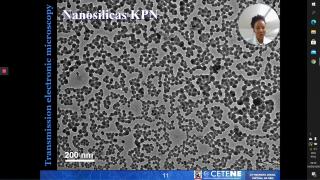
Photocatalysts based on SrSnO3 and SrSnO3@ZrO2 were prepared by the modified-Pechini method at 800°C and applied in the photocatalytic degradation of Remazol Golden Yellow dye under UV radiation. The photohydroxylation of terephthalic acid and scavengers were employed in order to evaluate the participation of each active species, such as hydroxyl radical, and photogenerated electrons and holes on the photocatalytic process. The band gap structure was evaluated using the Mott Schottky method in combination with UV-visible spectrophotometry. According to the results of transmission electronic microscopy (TEM) and X-ray photoelectron spectroscopy (XPS), nanometric SrSnO3 particles were obtained when supported on ZrO2, associated to an increased amount of Sn(II). Results indicated that both samples had high photocatalytic activity, although SrSnO3@ZrO2 showed the best decolorization performance ranging from 32% to 98%, which was associated to the morphology of the particles and to the greater amount of oxygen vacancies. The participation of hydroxyl radicals in the reaction was confirmed when terephthalic acid was used as probe and by using isopropanol as hydroxyl radical scavenger, which resulted in the inhibition of the photocatalytic process. The photocatalytic activity was clearly related to surface redox reactions (Figure 1), as H2O oxidation, with different behaviors in relation to O2 reduction depending on the pH of the solution.
Streamline your Scholarly Event
With nearly 200,000 papers published, Galoá empowers scholars to share and discover cutting-edge research through our streamlined and accessible academic publishing platform.
Learn more about our products:
