
Impact of sugarcane straw on soil properties, on the structure of microbial communities, and bioprospecting for the nutrient cycling process
Detalhes
- Tipo de apresentação: Pós-Graduação-Oral
- Eixo temático: 5 PPG Biotecnologia Vegetal
- Palavras chaves: Soil microbiota; Microbial Consortia; Nutritional Dynamics;
- 1 Universidade Estadual do Norte Fluminense Darcy Ribeiro
- 2 Universidade Federal do Norte Fluminense
- 3 Universidade Federal do Pampa
Impact of sugarcane straw on soil properties, on the structure of microbial communities, and bioprospecting for the nutrient cycling process
Rafael Luiz Frinhani Rocha
Universidade Estadual do Norte Fluminense Darcy Ribeiro
Resumo
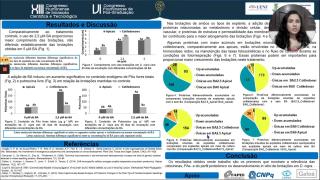
The green harvesting system generates a significant deposition of residues in the soil. Sustainable approaches to the management of sugarcane straw can benefit the soil and reduce the demand for chemical inputs. This study evaluated the influence of sugarcane straw on soil physical-chemical attributes and its influence on microbial community structure. Soil samples from an open field plot cultivated with sugarcane (SC-treatment) and non-cultivated sugarcane reference soil from an adjacent area (SR-treatment) were collected; both were sampled at two depths 1 (0-5 cm) and 2 (5-10 cm). Also, the straw was harvested and sub-fractionated into L1 (fresh straw) and L2 (previous year of straw deposition). The deposited straw on the soil was estimated at 8.98 ha-1, modulating distinct soil properties, nutrient bioavailability, and the microbial community structure. Beta diversity showed a distinct group for the abundance of reads for SC1 related to other treatments, and most of the replicates of SR clustered together. The alpha diversity for total species number had shown no significant differences. However, there is a trend towards greater diversity in SC, suggesting the influence of the management of this area on microbial diversity. At the genera level, 91 operational taxonomic units (OTU's) core microbial genera related to SC and SR were revealed. For SC, 81 exclusives OTU's microbial genera were noticed for 0-5 cm and 40 OTU's for 5-10 cm. Using a cultivation-dependent approach, 325 isolates were obtained (122 bacterial and 223 fungal isolates) and their ecological niche distribution was 43% and 19% (L1); 40% and 17% (L2); 7% and 26% (SC1); 2% and 21% (SC2); 3% and 12% (SR1); 5% and 5 % (SR2), respectively to bacteria and fungus. Additionally, we screened 28 bacterial isolates with N2-fixing potential and 27 microbial isolates (13 bacterial and 14 fungal) to decompose lignocellulosic residues. After the fungus-bacteria interaction tests, we selected 3 fungal isolates and 12 bacterial isolates, and in vitro decomposition tests revealed a greater potential for decomposition when combining fungus x bacteria associated with the greater microbial activity of the partners related to single microorganisms. The interspecific microbial consortium can be exploited to boost the microbial process related to sugarcane straw decomposition dynamics. Thus, we conclude that the deposited straw changes the properties and modulates the microbial communities of soil. A combination of cultivable and non-cultivable approaches offers subsidies for a microbial consortium efficient project in nutrient cycling in sugarcane that crop with an impact on sustainable crop management.
Discussões Científicas de Qualidade
Com ~200 mil publicações revisadas por pesquisadores do mundo todo, o Galoá impulsiona cientistas na descoberta de pesquisas de ponta por meio de nossa plataforma indexada.
Confira nossos produtos e como podemos ajudá-lo a dar mais alcance para sua pesquisa:
